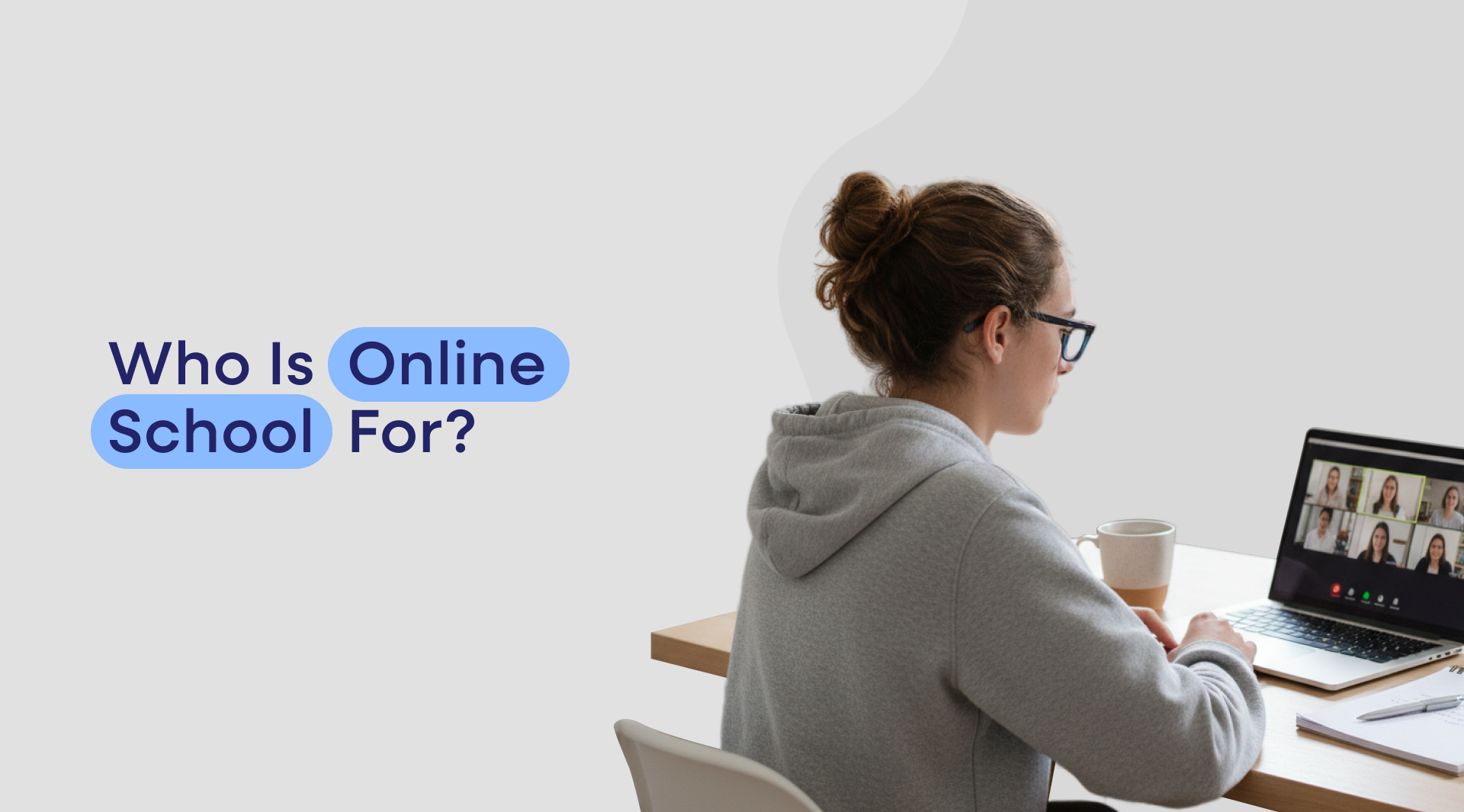
Who Is Online School For?
There is a stubborn myth that online school is only for children who cannot cope with "real" school. In reality, it is chosen by a broad range of families for positive reasons, and it suits several very different kinds of learner. This page is a plain map of who online school is for — the groups who thrive online, and why — with links to detailed guides for each.
Live-taught online school suits five distinct groups, not only struggling children: SEN and neurodivergent children; children with anxiety or emotionally based school avoidance (EBSA); children medically unable to attend; performance-committed children such as athletes and performers; and mobile families such as expat and military families. It is a positive choice for many children.
There is a stubborn myth that online school is only for children who cannot cope with "real" school. In reality, it is chosen by a broad range of families for positive reasons, and it suits several very different kinds of learner. This page is a plain map of who online school is for — the groups who thrive online, and why — with links to detailed guides for each.
Who is online school for?
Online school is for far more kinds of child than the stereotype suggests. Most of the children who thrive online fall into five broad groups:
SEN and neurodivergent children — autistic children, those with ADHD, dyslexia, dyspraxia and other profiles, who often benefit from a calmer environment, individual pace and built-in support. Read about learning support and the SENCO at an online school.
Children with anxiety or EBSA — anxious children, and those experiencing emotionally based school avoidance, for whom learning from a safe base with reduced pressure can be transformative.
Children medically unable to attend — those with a chronic illness, a health condition, or a period of recovery that makes regular physical attendance difficult.
Performance-committed children — young athletes, dancers, musicians and performers whose training and competition schedules a fixed school day cannot accommodate.
Mobile families — expat, military, diplomatic and travelling families who need an education that moves with them and provides continuity through relocations.
These groups are genuinely different from one another, which is the point: online school is not a single niche solution but a flexible model that meets many different needs. And critically, it is a positive choice for all of them — not a fallback for children who have failed elsewhere.
What types of students choose online school?
Beyond those five core groups, online school is chosen by an even wider range of students and families, because its underlying features — flexibility, individual attention, a calmer environment, and a globally recognised curriculum — meet many needs at once. Alongside the five groups above, families choose it for gifted children who are unchallenged in a large class and need to be stretched; children who were unhappy or bullied at a physical school; children who need to catch up, or want to work ahead; young carers balancing study with family responsibilities; and families who simply prefer a calmer, more individual education, or are reconsidering options after rising school fees.
What unites this wide range is not a shared problem but a shared benefit: an education that flexes around the individual child within a structure that keeps them progressing. That is why "online school for X" has so many answers.
What kind of student thrives in online school?
The student who thrives online is not a single type — but there are common threads. Broadly, a child does well at online school when they can engage with learning given structure and support (they do not need constant, in-person management to stay on task), and when a calmer, more flexible, more individual environment suits them better than a large, busy physical school.
Within that, particular children flourish especially: an anxious child freed from the pressure of a crowded classroom; a neurodivergent child in a calmer, more predictable setting with built-in accommodations; a gifted child able to work ahead instead of waiting; a young athlete or performer whose education now fits around their talent; a child with a health condition able to keep learning from home. The common thread is a good fit between the child and the environment — which is exactly what a fixed, one-size-fits-all school cannot offer every child. Read whether online school is right for your child.
Who benefits most from online school?
The children who benefit most are often those the traditional system serves least well — the child on the edges of a large class whose needs, talents or difficulties do not fit a one-size-fits-all model. An anxious child who dreads a physical school; a neurodivergent child overwhelmed by its sensory and social demands; a gifted child bored and coasting; a talented young athlete forced to choose between their sport and their education; a child with a health condition unable to attend reliably; a mobile family facing repeated disruptive school changes. For each, online school does not just cope with their situation — it can be markedly better than the alternative, because it is built to flex around exactly the things a fixed school cannot.
That said, it benefits many "typical" children too, who simply thrive with more individual attention, a calmer pace and greater flexibility. The point is not that online school is only for children with a specific need, but that it particularly benefits those a rigid system leaves behind.
Is online school just for kids who struggle?
No — and this is the most persistent and misleading myth about online school. While it genuinely helps children who have struggled in a physical school, it is equally chosen by families for entirely positive reasons: a gifted child accelerating ahead of their year group; a young athlete or performer pursuing a serious talent; an expat family wanting a consistent, globally recognised education through relocations; a family choosing a calmer, more individual education because they believe it is simply better for their child.
Framing online school as "for kids who can't cope" both stigmatises the children it helps and misses most of who actually chooses it. For a great many families, it is a proactive, positive choice — an education that fits their child better than the alternative — not a response to failure.
Reasons families choose online school
Families choose online school for a mix of reasons, which usually fall into a few themes:
A better environment for the child — calmer, smaller, less pressured, more individual; often decisive for anxious, neurodivergent, or unhappy children.
Flexibility — around sport, performance, health, travel or family circumstances that a fixed timetable cannot accommodate.
Academic fit — individual pace and attention, whether to stretch a gifted child or support one who needs more time.
Continuity — a portable education that moves with a mobile or relocating family.
A globally recognised qualification — the Pearson Edexcel British curriculum, opening university options worldwide.
Value — a quality education without the cost of a physical private school.
Most families choosing online school are motivated by more than one of these — and none of them is "my child failed at normal school."
Online school for different types of learners
Because online school suits so many different learners, the most useful next step is usually to read about the specific situation closest to your child. Detailed guides cover the range — including online school for anxious children, , children with ADHD, dyslexic learners, gifted and high-ability learners, elite athletes and performers, and children with chronic illness or medical needs, among many others.
The categories overlap, and many children fit several at once — a neurodivergent young athlete, or an anxious gifted child — so these guides are a way in rather than rigid boxes. Whatever combination of needs, strengths and circumstances your child has, there is very likely a guide that speaks to their situation.
Is online school mainstream now?
Yes — online school has moved firmly into the mainstream. Once seen as a niche or fringe option, it is now a widely chosen, established form of education, driven by rising demand, the normalisation of online learning, and growing recognition that a fixed, one-size-fits-all school does not suit every child. Families across the world now choose it as a serious, mainstream alternative — not an experimental or last-resort one — and it delivers the same globally recognised qualifications as a physical school, with results that stand alongside them.
This shift matters for how families think about the decision: choosing online school is no longer an unusual or risky move, but a recognised, credible choice made by a broad and growing range of families for a broad range of reasons.
Frequently asked questions
Who is online school for? It suits five distinct groups, not only struggling children: SEN and neurodivergent children; children with anxiety or EBSA; children medically unable to attend; performance-committed children like athletes and performers; and mobile families such as expat and military families. It is a positive choice for a wide range of children, not a last resort.
Is online school just for children who can't cope with normal school? No — this is the most persistent myth. While it helps children who struggled in a physical school, it is equally chosen for positive reasons: gifted children accelerating, athletes and performers pursuing talent, expat families wanting continuity, and families who simply believe it is a better fit for their child.
What kind of student thrives in online school? A child who can engage with learning given structure and support (rather than needing constant in-person management), and for whom a calmer, more flexible, more individual environment suits them better than a large physical school. Anxious, neurodivergent, gifted, sporting and medically-affected children often flourish especially.
Who benefits most from online school? Often the children a fixed system serves least well — the anxious child, the overwhelmed neurodivergent child, the bored gifted child, the talented young athlete, the child unable to attend for health reasons, the repeatedly-relocating family. Online school is built to flex around exactly the things a rigid school cannot.
Why do families choose online school? For a better environment (calmer, more individual), flexibility (around sport, health, travel), academic fit (individual pace), continuity (for mobile families), a globally recognised qualification, and value. Most families are motivated by several of these — and rarely by "my child failed at normal school."
Is online school mainstream now? Yes. It has moved from niche to established, widely-chosen education, driven by rising demand and growing recognition that one-size-fits-all schooling does not suit every child. It delivers the same globally recognised qualifications as a physical school, and choosing it is now a credible, mainstream decision.